In a world of fast fashion and off-the-rack convenience, there exists a sartorial secret weapon for both men and women: the tailored trouser. More than just a pair of pants, they are a foundational pillar of personal style, a declaration of fit, and an investment in confidence. Whether you’re navigating a boardroom, a creative agency, or a sophisticated evening out, trousers that are cut specifically for you change everything. They drape, they move, and they create a silhouette that ready-to-wear simply cannot replicate. This comprehensive guide will walk you through every facet of tailored trousers, transforming you from a passive buyer into an informed enthusiast ready to commission your perfect pair.
The Anatomy of a Perfect Fit
Before you ever choose a fabric, you must understand the language of fit. A tailor isn’t just taking measurements; they are solving a geometric puzzle unique to your body. The goal is a clean, uninterrupted line from the waistband to the hem. Here are the critical points of fit you must master.
Key Measurement Points
The foundation of any great trouser lies in precise measurements. While a skilled tailor will handle this, knowing the terms empowers you to communicate your preferences.
- Waist: This should sit comfortably at your natural waist, without needing a belt to hold them up. There should be no “muffin top” spillover, nor excessive gaping at the back.
- Hips/Seat: Crucial for comfort and drape. The fabric should skim the body without pulling across the thighs or leaving baggy fabric under the buttocks.
- Rise: The distance from the crotch seam to the top of the waistband. This defines where your trousers sit on your body. A low-rise sits on the hips, a mid-rise is universally flattering, and a high-rise elongates the legs and offers a classic, secure feel.
- Thigh & Knee: The circumference at the widest part of your thigh and around your knee. Enough ease is needed for sitting and movement without looking baggy.
- Leg Opening: The circumference of the hem. This is a major style determinant, from wide-leg to tapered.
Silhouette & Style
Once the foundational fit is secured, the silhouette is your stylistic choice. This is where personal expression comes into play.
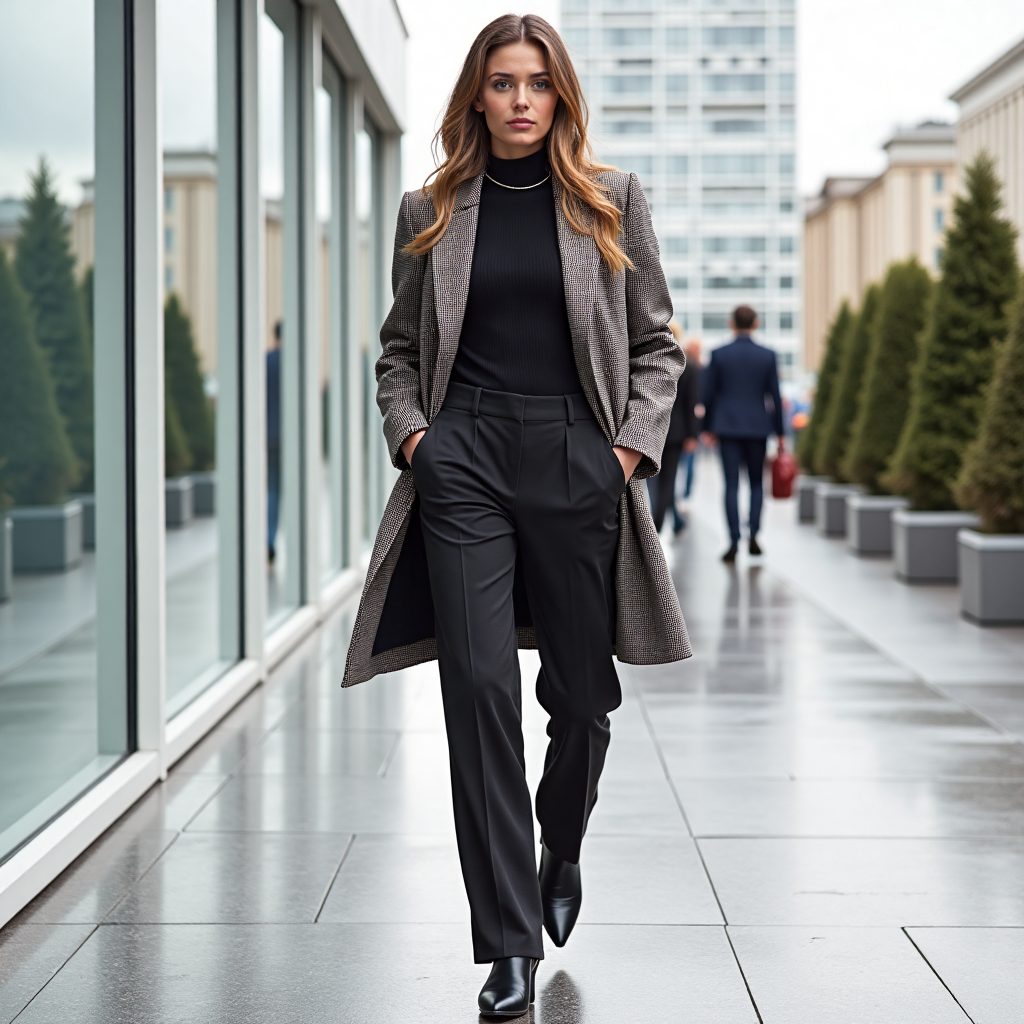
- Tailored Taper: The contemporary gold standard. Fitted through the seat and thigh, gradually narrowing to a clean, modern leg opening. It’s sharp, polished, and works in most settings.
- Straight Leg: A timeless classic. The leg falls straight from the knee to the hem, creating a clean, vertical line. It’s versatile and inherently balanced.
- Pleated vs. Flat Front: Pleats (single or double) add fabric at the waistband, allowing for more ease and drape when sitting. They offer a more traditional, elegant look. Flat fronts are minimalist, sleek, and often preferred for a trimmer silhouette.
Choosing Your Fabric: The Soul of the Trouser
The fabric you choose dictates not only the trousers’ appearance but also their function, seasonality, and longevity. This is where your investment truly takes shape. Consider weight, weave, and composition.
Wool & Worsted: The Cornerstones
For tailored trousers, wool is king. Its natural elasticity, breathability, and ability to hold a sharp crease are unmatched.
- Super 100s – 130s (Worsted): A fantastic starting point. Lightweight, smooth, and durable enough for daily office wear. It resists wrinkles and drapes beautifully.
- Super 150s and Above: Luxuriously soft and fine with a subtle sheen. Best for special occasions or less frequent wear, as the fineness can be slightly less durable for daily abrasion.
- Flannel: A brushed wool with a soft, fuzzy surface. A winter essential, offering warmth and a rich, matte appearance perfect for business casual or smart casual settings.
- Fresco or High-Twist Wools: Open-weave fabrics that are exceptionally breathable and wrinkle-resistant. The ultimate choice for summer suits and trousers or for those who travel frequently.
Beyond Wool: Cotton, Linen, and Blends
While wool reigns supreme, other fabrics have their rightful place in a well-rounded wardrobe.
- Premium Cotton (Gabardine, Twill, Cavalry Twill): Offers a crisp, clean look, especially in lighter colors for summer. Can be less forgiving than wool and may wrinkle more easily.
- Linen: The epitome of warm-weather style. Incredibly breathable with a distinctive textured slub. It wrinkles heavily, which is part of its charm, making it ideal for relaxed, elegant occasions.
- Blends (e.g., Wool-Silk, Wool-Linen): Often created to combine the best properties of both fibers. A wool-silk blend adds a luxurious luster and drape, while a wool-linen blend tempers linen’s wrinkling with wool’s structure.
The Tailoring Process: From Consultation to Completion
Understanding the journey of creating your trousers demystifies the process and ensures you get exactly what you want. Whether you opt for Made-to-Measure (MTM) or Bespoke, the collaboration is key.
Made-to-Measure vs. Bespoke
It’s important to know the difference. Made-to-Measure starts with an existing base pattern that is adjusted to your measurements. You select from a range of predefined options for fabric, style details, and fit preferences. It’s an excellent, accessible balance of customization and value. Bespoke is the pinnacle. A pattern is drafted from scratch, uniquely for you, often involving multiple fittings. It offers nearly unlimited customization but comes with a higher price and time commitment.
Key Decisions and Details
During your consultation, you’ll be asked to make several style choices. These are the finishing touches that personalize your garment.
- Waistband: Standard, extended (with side adjusters), or with belt loops? Side adjusters offer a cleaner look and eliminate the need for a belt.
- Closure: Zipper or button-fly? A button-fly is considered more traditional and robust.
- Pockets: Slanted pockets are classic and sleek. Straight pockets are more traditional. Don’t forget about the back pockets—welts, buttons, or none at all?
- Lining: While less common in trousers than jackets, a partial lining (in the waistband and upper trouser) can aid in comfort and durability.
- Hem Style: A plain hem is standard. A turn-up (cuff) adds weight for a better drape and is a strong style statement, often associated with more classic or full-cut trousers.
Conclusion: An Investment in Yourself
Navigating the world of tailored trousers may seem intricate at first glance, but it ultimately boils down to a simple principle: clothes that fit *you*, not the other way around. This journey—from analyzing fabric swatches to standing for a final fitting—is an act of intentional style. It moves you beyond trends and into the realm of personal uniform. Your first perfectly tailored pair will become a benchmark for how clothing should feel and look. You’ll notice the confidence that comes from a clean silhouette, the comfort of unrestrictive movement, and the quiet sophistication that never shouts but is always seen. Start with one versatile pair in a mid-gray or navy wool, and you’ll soon understand why, in the lexicon of style, tailored trousers are not just an item of clothing, but the cornerstone of a considered wardrobe.